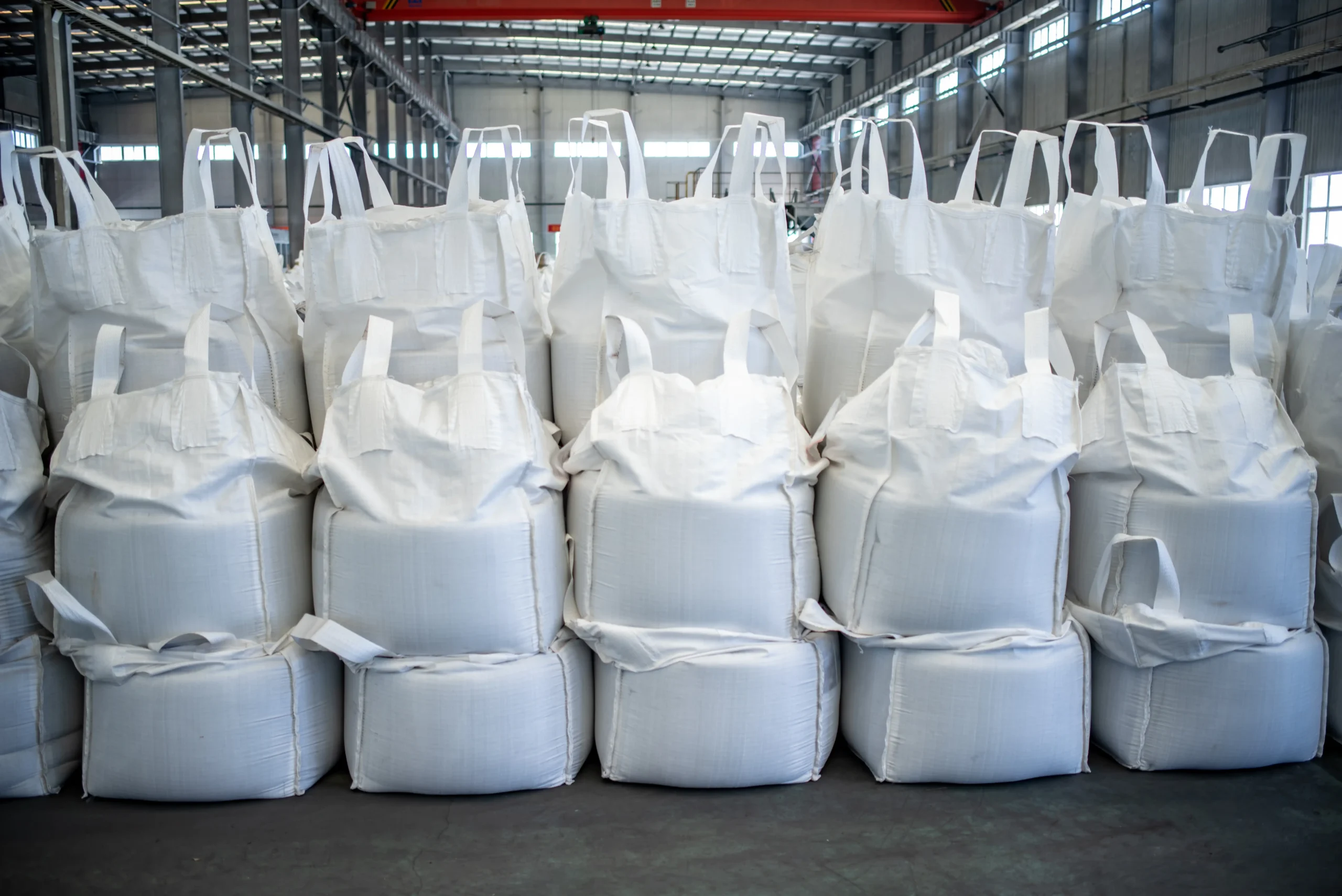
The flexible intermediate bulk containers market was valued at USD 6.6 billion in 2025 and is projected to reach USD 10.4 billion by 2036 at a CAGR of 4.2%. For Indian MSME exporters in this space, the opportunity is significant, but so is the operational challenge that comes with it. Buyers in Europe and the US want extended open credit of 60, 90 and sometimes 120 days while exporters need working capital to keep production moving. For manufacturers of FIBC bags and bulk packaging supplying to global markets, this isn’t a niche problem. It’s the condition of doing business.
One leading Indian MSME manufacturer of FIBC bags, based in Gujarat, has been navigating this tension for years. With a customer base spread across Europe and the US, and standard payment terms running between 60 and 90 days, the company’s working capital cycle was permanently stretched. As the company’s promoter explains, “Our buyers want to get the material, sell it, and pay when they get their money.”
Breaking the Credit Cycle
Export factoring wasn’t a new concept for the company. The nature of the market- long credit windows, buyers who treat open terms as a baseline expectation rather than a concession, had made it a long-standing operational necessity. But the experience of working with individual factoring companies came with its own friction. Mid-engagement, without notice, one provider stopped funding while managing an internal investor transition. Documents had already been prepared in their name; shipping bills, commercial invoices, everything had to be changed at the last minute.
“They did not inform us until the very last day,” the promoter recalls. “These processes need to be communicated well in advance.”
That experience prompted the conversation with Vayana TradeXchange. Through the non-recourse export factoring facility offered on the VTX platform, the exporter could convert outstanding invoices into immediate cash without breaking a sweat.
Faster Payment, Better Pricing, Bigger Orders
With invoices monetised early through VTX, the exporter no longer had to price in the cost of waiting. Buyers whose receivables moved through the factoring facility were offered better pricing. That pricing advantage translated directly into production priority. Factored buyers got more competitive rates, more reliable supply slots, and in turn, placed larger orders.
Smart Credit Intelligence
Export credit cover from government agencies comes with a limitation that the data is old. Buyers who defaulted years ago on unrelated disputes remain blacklisted, even when their current financials are perfectly healthy. The factoring facility offered by the financiers on VTX is backed by credit insurance, where buyer limits are assessed on current financial health, not stale records.
This proved to be a meaningful operational upgrade. A longstanding buyer in Spain with a clean payment record had appeared on the agency’s negative list. Through VTX, the relationship could be covered with up-to-date financials forming the basis of the credit decision. The credit insurance gives a clear picture of each buyer’s current financial health, informing decisions on where to increase exposure, where to hold steady, and where to pull back.
Credit Protection
Every export transaction carries a default risk- the possibility that a buyer simply doesn’t pay. Under a recourse factoring arrangement, that risk stays with the exporter. VTX’s facility is structured as non-recourse, meaning that in the event of a buyer default, the loss does not revert to the exporter. The exporter ships, raises the invoice, receives early payment and is protected with Trade Credit Insurance if the buyer fails to honour their obligation.
Adding New Buyers to the Portfolio
The US has always been an attractive market for the exporter; pricing is meaningfully higher than in Europe for the same product. US buyers require 90-day credit terms to commit to volume. With the US market firmly in sight, the exporter is expanding its manufacturing capacity with a new facility dedicated to serving American buyers and has already begun onboarding several new US accounts.
One Platform, No More Juggling
Before VTX, managing export factoring meant managing multiple relationships in parallel- separate negotiations with each factoring company, duplicate document submissions and no guarantee of transparent and fair terms. It was time-consuming and inefficient.
VTX helped consolidate all of that into a single platform. One onboarding, one document flow, multiple financiers competing to offer the best terms.
With early payments, live credit intelligence, non-recourse protection and a single platform replacing a tangle of bilateral negotiations, the exporter now has everything it needs to grow on its own terms.
If your organisation is looking to shorten the working capital cycle, protect against buyer default and access the best financing terms the market has to offer, reach out to us at enquiry@vayanatradexchange.com.